The Cost of a Breath: When the System Unplugged Leela Devi
Location
Shivpur
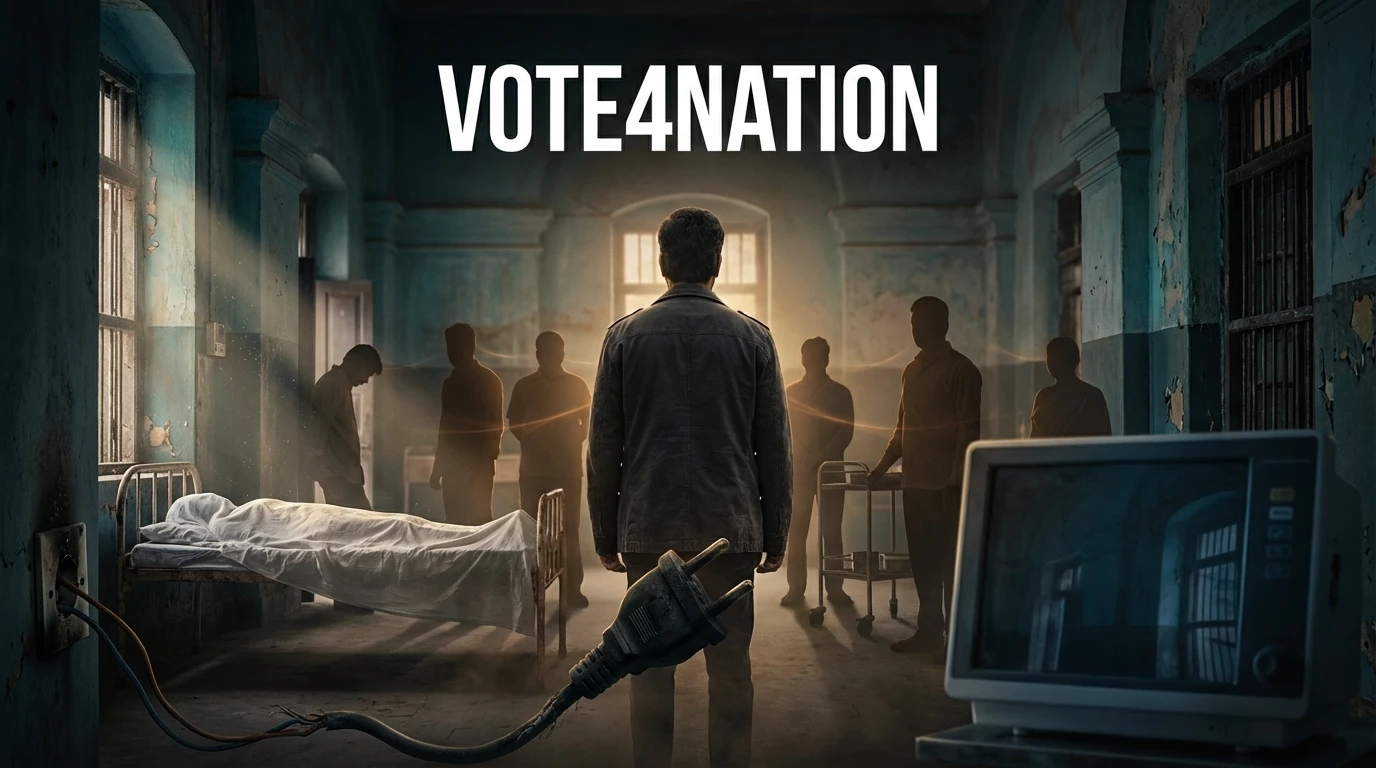
An elderly woman needing urgent dialysis is denied treatment at a private hospital because her government health card shows an 'inactive' status due to a bureaucratic glitch. Her son desperately tries to arrange cash, but the delay in treatment proves fatal.
Chapter 1: The Ride of Hope and Fear
It was 4:00 AM in the small town of Shivpur. The sky was still dark. The air was cold, but Ravi was sweating. He was pushing a rusted wheelchair. Inside it sat his mother, Leela Devi. She was 68 years old. Her face was pale, like old paper. Her breathing was heavy. Every breath sounded like a whistle.
Leela Devi’s kidneys had failed two years ago. Since then, her life depended on a machine. Twice a week, she needed dialysis. It was a process where a machine cleaned her blood because her body could not. Without it, the toxins would fill her blood, and she would die.
Ravi worked as a daily laborer at a construction site. He earned 400 rupees a day. But dialysis costs thousands. How did they survive? They had the ‘Health Card.’ It was a government promise. A plastic card that said the government would pay for the poor. For two years, it worked. But today, the air felt different.
“Beta, don’t run so fast. The bumps hurt my back,” Leela whispered.
“Sorry, Ma. But we have to be first in line. If we are late, the machine will be taken,” Ravi said, panting.
They reached the ‘City Care Hospital.’ It was a private hospital, but it was on the government panel. This meant they accepted the poor people's Health Card. The hospital looked like a hotel from the outside. Glass doors. Shiny floors. But for people like Ravi, it was a place of fear.
Chapter 2: The Red Light at the Counter
Ravi parked the wheelchair in the corner. He ran to the reception. There was a long line already. People with broken bones, people with fevers, people crying in pain. Ravi stood in line. He held the Health Card tight in his hand. It was his mother’s lifeline.
After one hour, he reached the counter. The man behind the glass, Mr. Gupta, was typing on a computer. He did not look up.
“Name?” Gupta asked coldly.
“Leela Devi. Dialysis. It is urgent, Sir,” Ravi said, sliding the card under the glass.
Gupta took the card. He swiped it in the machine. Beep. A red light flashed on the screen. Gupta frowned. He swiped it again. Beep. Red light again.
“Card is blocked,” Gupta said, handing it back.
Ravi froze. “What? blocked? But Sir, we used it on Tuesday. It was fine.”
“I don’t know. The screen says ‘Inactive Status’. Maybe you did not link your new documents. Maybe the government budget is paused. I cannot admit her,” Gupta said, turning to the next person.
The Wall of Silence
Ravi felt the ground shake. “Sir, please check again! Look at her!” He pointed to Leela Devi, who was slumped in the wheelchair. “She cannot breathe properly. If she doesn’t get dialysis today, she will collapse.”
“Next!” Gupta shouted, ignoring Ravi.
Ravi did not move. “Sir, I beg you. Take the money later. Fix the card later. Just start the machine.”
Gupta looked at Ravi with eyes that had no soul. “This is a private hospital, not a charity house. The government hasn’t paid our dues for six months. Now they are blocking cards randomly to save money. If the green light doesn’t show, we don’t get paid. If we don’t get paid, we don’t treat. Get out of the line.”
“Where do I go? The government hospital is 50 kilometers away! She won’t make it!” Ravi cried.
Security guards walked towards Ravi. They grabbed his arm. “Come on, move. Don’t make a scene here.”
Chapter 3: The Price of Breath
Ravi ran back to his mother. She was gasping now. Her eyes were rolling back. The toxins were rising in her blood. She needed help immediately.
He took out his phone. He called the helpline number on the back of the card. A computer voice answered.
“Press 1 for English. Press 2 for Hindi...”
Ravi pressed 2. “All our executives are busy. Your wait time is... 15 minutes.”
15 minutes. His mother didn’t have 15 minutes. He looked at the hospital reception again. He ran back. He took out his wallet. It had 1,200 rupees.
“Sir, I have cash! How much for the dialysis?” Ravi asked Mr. Gupta.
Gupta sighed. “Without the card? The cash price is 4,500 rupees. Plus 1,000 for medicine.”
5,500 rupees. That was two weeks of hard labor. Ravi didn’t have it. He fell to his knees.
“Take this watch. Take my phone. Please, start the treatment,” Ravi begged. He put his cheap phone and old watch on the counter. The people in the line watched silently. No one helped. Everyone was fighting their own war.
“We need cash, not junk,” Gupta said. “Go arrange the money. Or take her to the Civil Hospital.”
Chapter 4: The Race Against Death
Ravi ran out of the hospital. He called his wife. “Sell the earrings. The gold ones your father gave. Bring the money. Now!”
He went back to Leela Devi. She was holding her chest. “Ravi... take me home,” she whispered. “Don’t... spend... money.”
“No, Ma. You will live,” Ravi said, tears streaming down his face. He tried to fan her with a newspaper. The hospital air conditioning was cool, but they were sitting near the exit, where the hot wind blew.
An hour passed. His wife arrived, breathless. She had sold the earrings at a pawn shop for 3,000 rupees. It was less than the real value, but they had no choice. They had 4,200 rupees now. Still short.
Ravi ran to Gupta again. “I have 4,200. Please. I will bring the rest tomorrow. I swear on my mother’s life.”
Gupta looked at the clock. It was 11:00 AM. “Fine. Deposit it. But if you don’t pay the rest by evening, we stop the treatment midway.”
Chapter 5: Too Little, Too Late
They rushed Leela Devi into the dialysis room. But the delay had done its damage. Her blood pressure had dropped dangerously low. The doctors struggled to find a vein.
Ravi stood outside the glass door, watching. He saw the doctors pressing her chest. He saw them running with injections. He saw the flat line on the monitor.
Beeeeeeep.
The sound that haunts every hospital corridor.
The doctor came out. He looked tired. “I am sorry. If you had brought her two hours earlier, we could have saved her. Her heart gave up.”
Ravi stood still. The 4,200 rupees were still in his hand. The Health Card was in his pocket. The card that was supposed to save the poor. The card that failed because of a ‘glitch’ or a ‘budget cut’.
The Investigation: Why Did This Happen?
VOTE4NATION investigated this incident. We found that Ravi’s story is not unique. Across the state, thousands of Health Cards were silently blocked.
Here is the truth:
- The government delayed payments to private hospitals for 8 months.
- To reduce the pending bills, the software was tweaked to reject ‘inactive’ users.
- Elderly patients who could not travel to verify documents were simply deleted from the system.
- Private hospitals, unpaid for months, have stopped having mercy. They demand cash or turn patients away.
Ravi’s mother did not die because of kidney failure. She died because a server decided she was not eligible. She died because a clerk waited for a green light instead of looking at a dying woman.
Questions We Must Ask
Who is responsible for the software glitch? The engineer sitting in an AC office? The Minister who cut the budget? Or the hospital that valued protocol over life?
Ravi is now alone. He has no mother. He has no gold earrings. He only has a plastic card that says ‘Health Guarantee.’
VOTE4NATION Verdict
This is Institutional Murder. When technology fails in banking, money is returned. When technology fails in healthcare, lives are lost. We demand an immediate audit of all blocked Health Cards and compensation for families like Ravi’s.
Story from real incident happened in India.