HealthcareThriller
The Silent Robbery: How a Hospital Bill Killed a Family's Future
Location
Mumbai
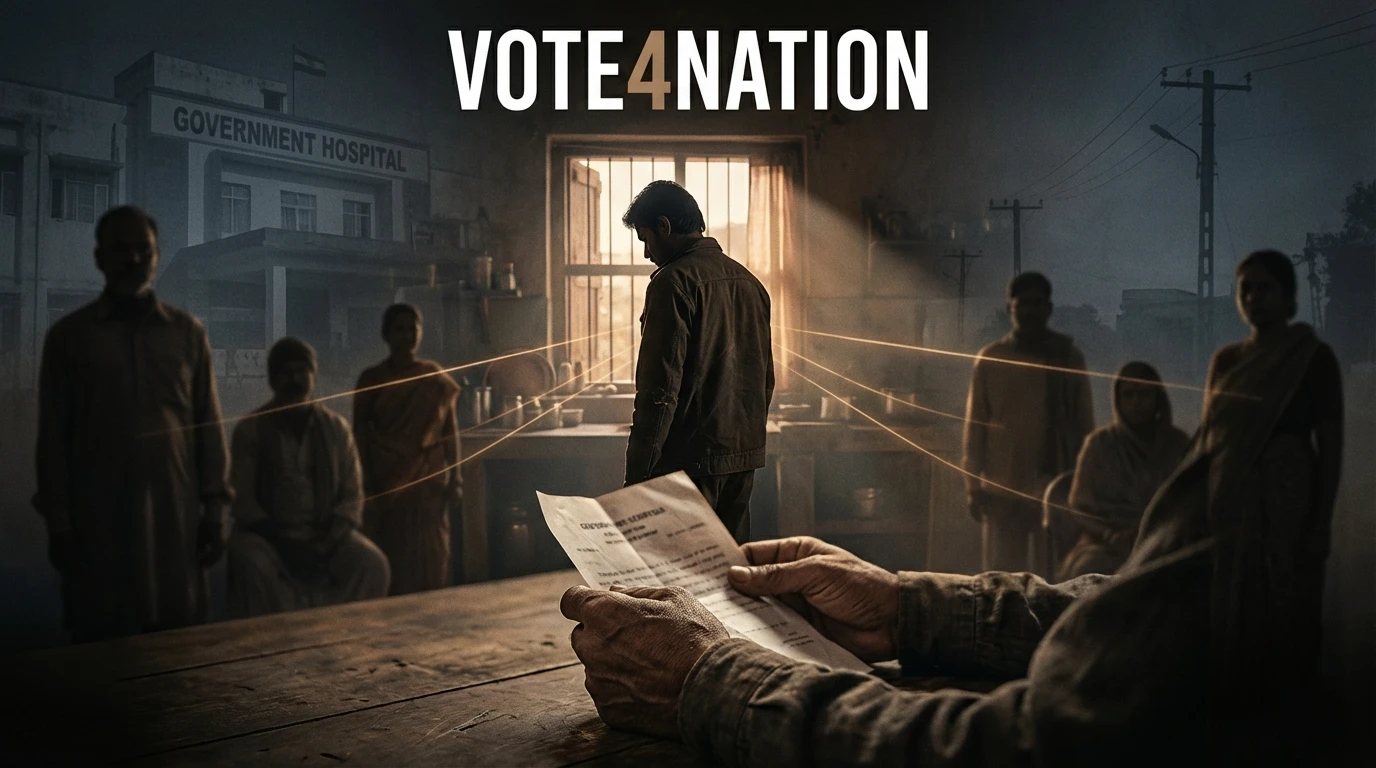
Medical inflation is rising at 14% annually. A middle-class family faces financial ruin when hidden hospital charges ('consumables') and fine-print insurance clauses force them to pay huge amounts despite having health insurance.
OverbillingMedical NegligenceInsurance FraudMental Harassment
The Night Everything Changed
It was a Tuesday evening. The air in the Sharma household was filled with the smell of cumin and roasting roti. Ramesh Sharma, a 45-year-old bank clerk, was laughing at a joke on the television. His wife, Sunita, was in the kitchen. Their son, Ankit, was studying for his board exams in the small bedroom. Life was simple. Life was good. Then, a sound of breaking glass shattered the peace. “Ankit! Papa! Come quickly!” Sunita’s voice was weak. Ramesh ran to the kitchen. Sunita was on the floor. Her hand was clutching her chest. Her face was pale, white like a sheet of paper. She was sweating, even though the fan was on.“My chest... it feels like a heavy stone is sitting on it,” she whispered.Ramesh froze for a second. Panic hit him like a cold wave. But he had to move. He had to save her. “Ankit, call a taxi! No, call an ambulance! Hurry!” Ramesh screamed.
The Race Against Time
The ambulance siren was loud, but Ramesh could only hear his own heartbeat. Thump. Thump. Thump. He held Sunita’s cold hand. “Don’t worry, Sunita. We have the health insurance card. I paid the premium last month. We have a cover of 5 Lakh rupees. We are safe,” Ramesh told her, trying to be brave. He truly believed it. He thought 5 Lakh rupees was a mountain of money. He thought it would cover anything. He was wrong.The Golden Cage: Enter the City Super Specialty Hospital
The ambulance stopped at the ‘City Super Specialty Hospital’. It looked less like a hospital and more like a 5-star hotel. The floors were shiny marble. There was a coffee shop in the lobby. The air conditioning was freezing cold. Doctors in blue scrubs rushed Sunita into the Emergency Room. Ramesh stood outside, shaking. A man in a sharp suit walked up to him. He was not a doctor. He was from the ‘Admission Desk’. “Mr. Sharma? We need you to sign these forms immediately so we can start the treatment,” the man said. His voice was smooth, like a salesman. Ramesh grabbed the pen. “Yes, yes. Save her first.” “Also, sir, please deposit Rs 50,000 as an initial advance,” the man added. Ramesh paused. “But I have insurance. Cashless facility.” The man smiled, but his eyes were cold. “Insurance approval takes time, sir. We cannot wait. If the insurance pays, we will refund you. Please, swipe your card. Every minute is precious for the patient.” Ramesh swiped his debit card. His savings for Ankit’s college fees took the first hit.The Diagnosis and the Relief
Two hours later, a doctor came out. “It was a minor heart attack. We have placed a stent. She is stable now,” the doctor said. Ramesh cried tears of joy. He hugged Ankit. “See? Mummy is fine. The money doesn’t matter.” They moved Sunita to the ICU. Ramesh sat on a steel chair outside, exhausted but happy. He thought the worst was over. He did not know that the real nightmare was just starting. The nightmare was not medical. It was financial.The Meter Starts Running
Day 1 passed. Sunita was recovering. Day 2 passed. The hospital staff was very polite. They gave Ramesh a daily update of the bill. Day 2 Bill Estimate: Rs 1,80,000. Ramesh stared at the paper. “One lakh eighty thousand? For two days? But the package for angioplasty was supposed to be 2 Lakhs total!” He went to the billing counter. There was a long line of worried people. Some were crying. Some were shouting. When Ramesh’s turn came, he asked, “Why is the bill so high?” The billing clerk, Mr. Gupta, didn’t even look up. “Doctor visit charges, ICU monitoring charges, dietitian charges, nursing charges, visiting consultant charges...” he rattled off a list. “But I have insurance,” Ramesh repeated, like a prayer. “Insurance will check the claim at discharge, sir. Don’t worry,” Gupta said.The Consumables Trap
By Day 5, Sunita was ready to go home. Ramesh was happy. He went to the billing desk for the final settlement. The final bill was handed to him. Total Bill Amount: Rs 4,12,000. Ramesh took a deep breath. “Okay. My insurance limit is 5 Lakhs. Send this to the insurance company.” The clerk typed on the computer. “We have already sent it, sir. The approval has come.” “Great,” Ramesh said, picking up his bag. “So I can take my wife home?” The clerk cleared his throat. “Not yet, sir. The insurance company has approved Rs 2,80,000. You have to pay the remaining Rs 1,32,000 from your pocket.” Ramesh felt the ground spin. “What? Why? I have a 5 Lakh policy! Why are they paying only 2.8 Lakhs?” The clerk handed him a breakdown sheet. He pointed to a column marked ‘Non-Medical Expenses / Consumables’. Ramesh read the list. His eyes widened in shock.- Gloves: Charged Rs 15,000.
- Masks and PPE Kits: Charged Rs 22,000.
- Cotton and Gauze: Charged Rs 8,000.
- Sanitizer: Charged Rs 5,000.
- Admission File Charges: Rs 2,000.
“This is robbery!” Ramesh screamed. “You people are looting us!”
The Cold Reality
The Billing Manager, a stern woman named Mrs. Deshmukh, came out. She invited Ramesh into her cabin. “Mr. Sharma, please calm down,” she said. “We do not set the insurance rules. The insurance companies do not pay for ‘consumables’. Gloves, masks, syringes, thermometer covers—these are not covered. Also, your policy has a room rent cap.” “What room rent cap?” Ramesh asked, his voice shaking. “Your policy allows a room of Rs 4,000 per day. But you chose a room that costs Rs 8,000 per day. Because you took a more expensive room, the insurance company has deducted ‘Proportionate Charges’ on everything. Doctor fees, surgery cost—everything was cut by 50% because you chose a better room.” Ramesh put his head in his hands. “Nobody told me this. When I was signing the form, nobody told me about proportionate deduction!” “It is in the fine print, sir,” she said simply.The Hostage Situation
“I don’t have 1.3 Lakhs right now,” Ramesh pleaded. “Please, let my wife go. I will pay in installments.” Mrs. Deshmukh shook her head. “I am sorry. It is hospital policy. Full settlement is required before discharge pass is issued.” Sunita was sitting on the bed in her room, dressed and ready to go. She waited for one hour. Two hours. Three hours. Ramesh was outside, making frantic phone calls. He called his brother. “Can you lend me 50,000?” He called his friend. “I need urgent help.” Finally, Ramesh had to break his fixed deposit. The money he had saved for 10 years for his old age. He transferred the money. It took 4 hours. Sunita sat in the room, feeling guilty. She felt like she was a burden. “Because of me, Ramesh is losing everything,” she thought. Her blood pressure started rising again from the stress.The Aftermath: A Broken Home
They reached home at 9 PM. The house was the same, but the feeling was different. The safety net was gone. Ramesh sat at the dining table with the bills spread out. He looked at the numbers. Total Cost: Rs 4,12,000. Insurance Paid: Rs 2,80,000. Ramesh Paid: Rs 1,32,000 + Rs 10,000 (Medicines outside hospital). He read a news report on his phone. It said, “Healthcare inflation in India is rising by 14% every year.” He looked at Ankit. “Ankit,” Ramesh said softly. “For your engineering admission... we might have to take a loan now. The savings are gone.” Ankit nodded silently. He understood. The hospital had not just treated a heart attack; they had extracted the family's future.The Lesson for Every Indian
Ramesh realized something that day. The system is designed to confuse. 1. The Big Number Lie: Having a “5 Lakh” or “1 Crore” policy means nothing if they don't cover the “consumables”. 2. The Room Rent Trap: If you take a room slightly better than your limit, they cut money from the entire bill, not just the room rent. 3. The Inflation Monster: Every year, hospitals increase prices by 14%, but salaries only grow by 5%. Ramesh saved his wife, but the system broke his back. He looked out the window at the city lights. Somewhere out there, another ambulance was wailing. Another family was rushing to the “Golden Cage,” thinking their insurance card would save them. Ramesh whispered to the empty room, “Read the fine print. Please, read the fine print.”Story from real incident happened in India.
Produced by: VOTE4NATION Investigative Team