The Price of Life: How a Father Lost Everything to a 'Five-Star' Hospital
Location
New Delhi
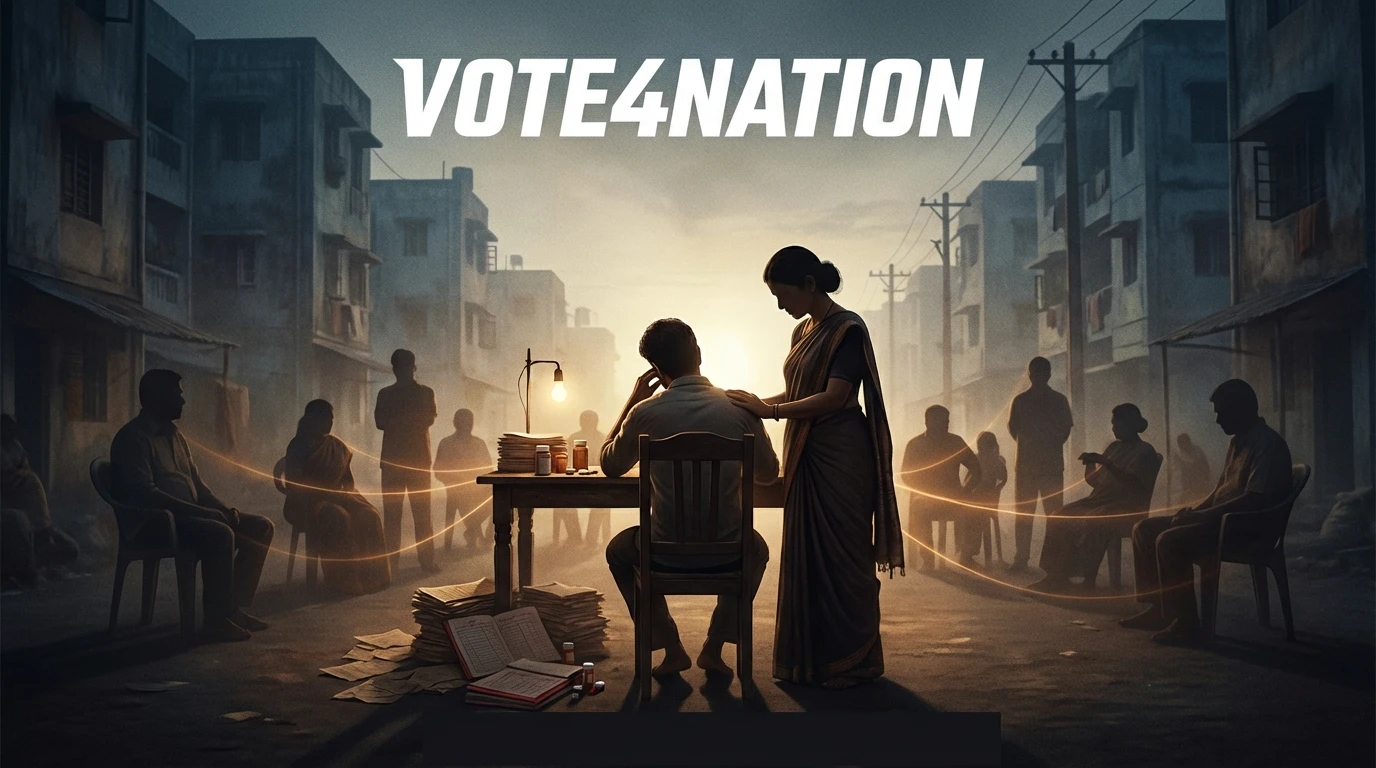
Private hospitals claim to save costs by streamlining operations, but a middle-class father faces financial ruin due to hidden charges, inflated bills, and forced ICU stays for his daughter's Dengue treatment.
The Price of Life: How a Father Lost Everything to a 'Five-Star' Hospital
The Silent Scream at the Billing Counter
It was 3:00 AM. The air conditioner in the lobby of City Life Super Speciality Hospital hummed a cold, indifferent tune. Ramesh sat on the steel chair, his head buried in his hands. In his pocket, his phone buzzed with another message from the bank. "Balance Insufficient."
Inside the Intensive Care Unit (ICU) on the fourth floor, his 12-year-old daughter, Anjali, was fighting for every breath. She had been admitted for a high fever, suspected Dengue. But down here, Ramesh was fighting a different war. A war against numbers, hidden charges, and a system that looked at his daughter and saw a customer, not a child.
"I brought her here because I wanted the best. I thought 'best' meant they would save her. I did not know 'best' meant they would sell my life to pay for it." – Ramesh, 45, School Teacher.
The Trap: "Don't Worry, We Have a Package"
Seven days ago, the nightmare began. Anjali collapsed at school. Her body was burning hot. The local clinic suggested immediate hospitalization. Panic took over Ramesh's heart. He rushed her to City Life Hospital, a towering building of glass and steel in the heart of the city.
At the reception, a lady with a polite smile handed him a form. "Sir, please deposit Rs 50,000 as an initial advance. Don't worry, we have a Dengue Care Package. It is very affordable. Roughly Rs 1.5 Lakhs for the whole treatment. We streamline operations to save your costs."
Ramesh felt a wave of relief. Rs 1.5 Lakhs was a lot, but he had some savings. He nodded, signed the papers, and handed over his debit card. He did not see the tiny asterisk (*) at the bottom of the page that said: "Package does not include unforeseen complications, consumables, and visiting consultant fees."
The Meter Starts Running
For the first two days, things seemed fine. Anjali was in a shared room. Doctors came and went. But on the third day, the tone changed.
"Her platelet count is dropping fast," Dr. Mehta, the senior consultant, said, looking at his clipboard, not at Ramesh. "We cannot risk keeping her in the ward. We need to move her to the ICU immediately. Just a precaution."
Ramesh agreed. What else could a father do? He could not say no to saving his child. As Anjali was wheeled into the ICU, the billing meter shifted gears. It went from a slow trot to a sprint.
The Bill That Never Stopped Growing
Every morning, a billing executive would find Ramesh in the waiting area. He would hand over a printed sheet. It looked like a grocery list, but the items were terrifying.
- ICU Bed Charge: Rs 25,000 per day
- Oxygen Support: Rs 5,000 per day
- Consumables (Gloves, Syringes, Cotton): Rs 8,000 per day
- Dietician Visit: Rs 2,000 (She only waved from the door)
- Physiotherapy: Rs 3,000 (No one touched her legs)
"Wait," Ramesh stammered on the fifth day, his hands shaking. "You said the package was Rs 1.5 Lakhs. We are already at Rs 3 Lakhs. How is this possible?"
The billing executive adjusted his glasses. "Sir, the package is null and void once the patient enters the ICU. Now, everything is billed on actuals. Plus, there are unforeseen charges. The doctor ordered extra blood tests. Those are not cheap."
The Investigation: Behind the Glass Walls
While Ramesh was running around trying to arrange loans from his relatives, something dark was happening inside the hospital management rooms. Our investigation team spoke to a former nurse, Sister Meera (name changed), who worked at City Life for five years.
"It is a target system," Meera whispered, looking over her shoulder. "The management tells the doctors—if a patient has insurance or looks like they can pay, do not discharge them early. Keep them for observation. Order the expensive MRI, even if a simple X-ray is enough. If we save costs on operations, we don't pass that saving to the patient. We keep it as profit."
Meera revealed a shocking truth. The "Consumables" section of the bill is where the biggest theft happens. A pair of sterile gloves costs the hospital Rs 10. They bill the patient Rs 200. If a nurse opens a packet of 10 syringes but uses only one, the patient is billed for the whole packet. The rest goes back into stock to be sold again.
The Breaking Point
On the ninth day, Anjali was sitting up. She was weak, but she was smiling. The fever was gone. Ramesh felt a tear roll down his cheek. His daughter was back. He went to the doctor's cabin.
"Doctor, can we take her home now? She looks fine," Ramesh asked.
Dr. Mehta frowned. "She is stable, yes. But we need to keep her for another 48 hours. Just to monitor her vitals. We don't want a relapse."
Ramesh walked to the billing counter. The current outstanding amount was Rs 6.5 Lakhs. He had already paid Rs 4 Lakhs by selling his wife's gold bangles and taking a personal loan. He did not have another penny.
"I cannot pay for two more days," Ramesh told the manager. "Please, discharge her. I will take care of her at home."
The manager's face turned cold. "Sir, against medical advice discharge is possible. But you must clear the full bill first. We cannot release the patient until the dues are zero."
Held Hostage
It is a term usually used for criminals, but in India, patients are often held hostage by hospitals. Ramesh sat in the lobby for six hours. He called friends, he begged his school principal for an advance salary. He felt like a beggar, stripped of his dignity.
Meanwhile, inside the room, Anjali asked the nurse, "Where is Papa? Why are we not going?" The nurse could not look the child in the eye.
Finally, a local social worker intervened. They threatened to call the media. Fearing bad press, the hospital management offered a "discount." They waived off Rs 50,000—charges that were likely fake to begin with.
The Aftermath: A Broken Home
Ramesh took Anjali home that night. She is healthy now, playing in the sun. But Ramesh is not the same. He works two jobs now. He teaches at the school in the morning and gives tuition until late at night to pay off the debt.
The gold that was meant for Anjali’s future marriage is gone. The savings for a small house are gone. All because a hospital decided to maximize "resource use" to generate profit, not to save costs for the patient.
The Reality of "Cost Savings"
The report says private hospitals are streamlining operations to save 22% in costs. But who are they saving it for? The investigation shows that while hospitals might be buying medicines cheaper and managing staff better, these savings rarely reach the common man. Instead, bills are inflated with:
- Admission Fees: Charging for the file and registration.
- Visit Charges: Multiple doctors visiting for 2 minutes each and charging full consultation fees.
- Markups: Medicine sold at Maximum Retail Price (MRP) even if the hospital gets it at a 40% discount.
VOTE4NATION.in Asks:
Is healthcare a service or a business? When a father has to choose between his dignity and his daughter's life, the system has failed. We need strict laws. We need a cap on prices for consumables. We need transparency.
Ramesh saved his daughter, but the hospital killed his spirit. How many more Rameshs are sitting in hospital lobbies right now, staring at a bill they cannot pay?
This is not just a story about money. It is a story about the theft of trust.
Produced by: VOTE4NATION.in