The Price of Breath: How a Hospital Bill Destroyed a Family
Location
Mumbai
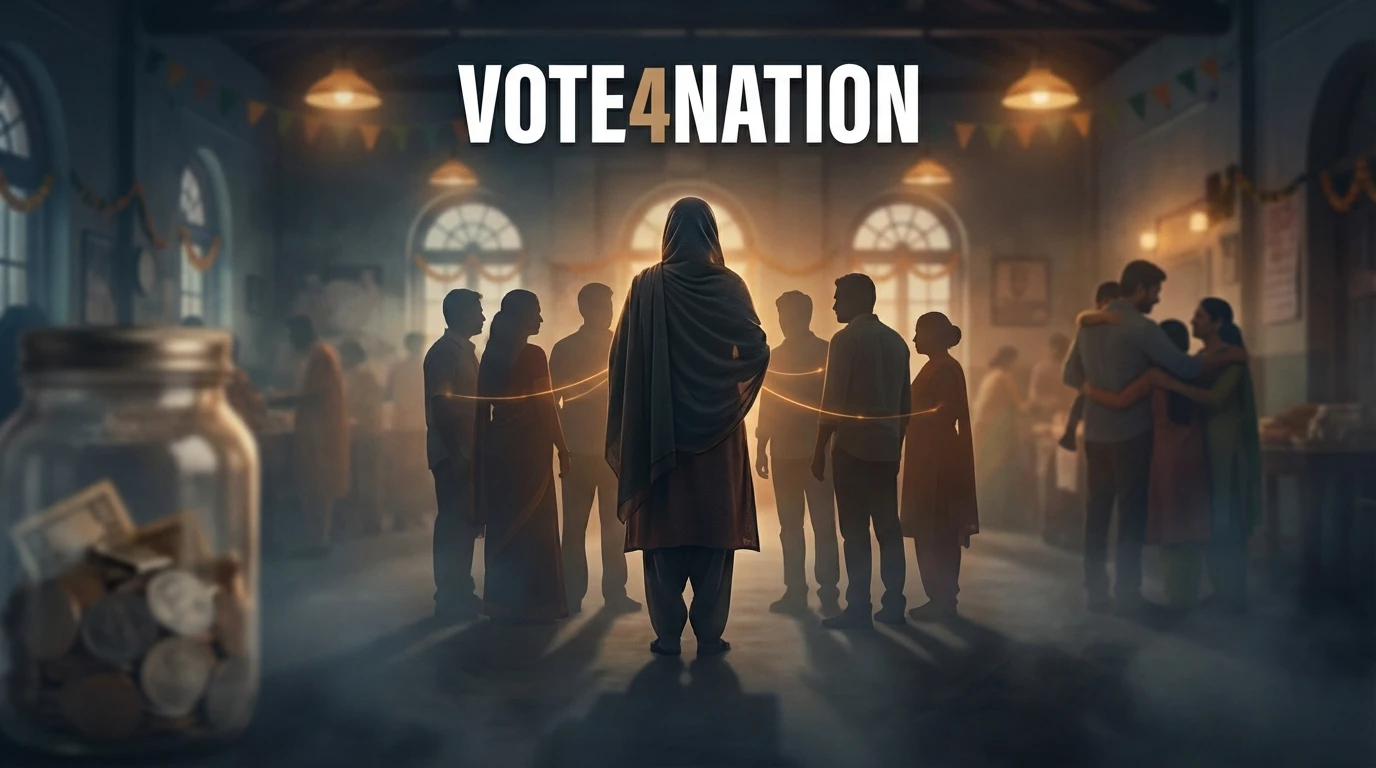
A middle-class man admits his father to a private hospital during an emergency. He is trapped by hidden charges, exorbitant billing, and refusal to release the body until the bill is paid, leading to financial ruin.
The Golden Cage: How a Private Hospital Stole a Family's Future
The rain was falling hard in Mumbai. But for Ravi, the water on his face was not rain. It was tears. He stood outside the shiny glass doors of 'City Care Super Specialty Hospital'. Inside, the lights were bright. The floor was clean like a mirror. But to Ravi, this place was not a temple of healing. It was a trap. A golden cage that had swallowed his father and his future.
This is not just Ravi's story. This is the story of every middle-class Indian family who dares to get sick in a private hospital.
The Emergency at Midnight
It started three nights ago. Ravi’s father, Mohan, felt a sharp pain in his chest. Mohan was a retired clerk. He had a small pension. He lived a simple life. Ravi worked as a sales executive, earning just enough to pay rent and buy food.
When Mohan collapsed, Ravi panicked. The government hospital was 15 kilometers away. The traffic was bad. The ambulance driver said, "If you want him to live, go to City Care. It is nearby."
Ravi nodded. He just wanted his father to breathe. He did not know that this 'yes' would cost him everything.
The First Shock: The Deposit
At the reception, the air conditioner was cold. The receptionist did not look at Ravi's crying face. She looked at the computer screen.
"Admission charge is Rs 50,000. You must pay now. Otherwise, we cannot admit the patient into the ICU."
Ravi’s hands shook. Rs 50,000? That was his savings for two years. He begged, "Please start the treatment. I will pay in the morning."
The reply was cold. "Sir, this is hospital policy. No money, no doctor."
Ravi called three friends. He borrowed money. He transferred the amount. Only then, the doors opened. His father was taken inside. Ravi sat on the steel chair, shivering.
The Meter Starts Running
The next morning, the nightmare truly began. The doctor came out. He wore a crisp white coat and a heavy watch. He smiled, but the smile did not reach his eyes.
"He is stable," the doctor said. "But we need to keep him in the ICU for observation. We need to run some tests."
Ravi felt relieved. He thought the worst was over. But then, the nurse handed him a slip. It was a list of medicines.
"Go to the hospital pharmacy and buy these immediately," she ordered.
Ravi ran to the shop on the ground floor. The bill was Rs 12,000. For one day of medicine. He looked at the list. Gloves, masks, syringes, high-end antibiotics. He bought them.
The Hidden Charges Appear
By day three, Mohan was talking. He was feeling better. Ravi asked the billing desk for an estimate. He wanted to know how much he had to pay so far.
The billing clerk printed a paper. It was three pages long. Ravi looked at the total number. He almost fainted.
Total Due: Rs 2,45,000.
"How?" Ravi screamed. "It has been only three days!"
He looked at the details. This is what he saw:
- Bed Charge: Rs 15,000 per day (It was a shared room).
- Duty Doctor Visit: Rs 5,000 per visit (The doctor came twice a day for 2 minutes).
- Nursing Charge: Rs 3,000 per day.
- Dietician Charge: Rs 2,000 (His father only ate Dal water).
- Sanitization Charge: Rs 1,500.
- AC Maintenance Charge: Rs 1,000.
Ravi went to the manager. "Sir, I was told the package is Rs 10,000 per day. What are these extra charges?"
The manager adjusted his glasses. "Sir, the package covers only the bed. The doctor fees, the nursing, the oxygen, the monitor rental, the gloves, the cotton... everything is extra. You signed the form during admission."
Ravi remembered the form. It was ten pages of small English text. He had signed it in panic while his father was gasping for air. He had signed his own financial death warrant.
The Trap Tightens
Ravi wanted to shift his father to a government hospital. He told the doctor. The doctor’s face changed. The polite smile vanished.
"You can take him. But he is on a ventilator now. If you move him, he might die in the ambulance. We are not responsible. Also, you must clear the full bill before leaving."
It was a threat. Ravi could not risk his father’s life. He was trapped. The meter kept running. Tick-tock. Every hour cost Rs 1,000.
Ravi stopped eating. He stood outside the ICU. He watched nurses carry bags of medicines inside. He wondered if they were really using all of it. One time, he saw a nurse drop a sealed injection on the floor. She kicked it under the bed and opened a new one. That injection cost Rs 4,000. It was Ravi’s money on the floor.
The Final Blow
On the fifth day, late at night, the machines beeped loudly. Doctors ran inside. Ten minutes later, they came out. They looked at Ravi with blank faces.
"We are sorry. He had a sudden cardiac arrest. We tried our best."
Ravi fell to his knees. His father was gone. The man who taught him to walk was gone.
But the hospital did not give him time to cry. Within 20 minutes, the billing department called him.
"Sir, please come to the desk to settle the final bill."
Ravi walked like a zombie to the desk. The final bill was Rs 4,80,000.
"I have paid Rs 1,00,000 already," Ravi whispered.
"Yes, so the pending amount is Rs 3,80,000. Please pay by card or cash so we can release the body."
Held Hostage
This is the most cruel part of the story. Ravi did not have the money. He pleaded with the management. "My father is dead. Please let me take him for the funeral. I will pay you later. I will sign a bond."
The manager shook his head. "Sorry. Rules are rules. System will not generate the Gate Pass until the balance is zero."
They held Mohan’s body in the mortuary. It was treated like luggage in a cloakroom. A son could not perform the last rites for his father because he did not have money.
Ravi went out. He called a money lender. The lender was a shark. He charged 10% interest per month. Ravi pledged his mother’s gold chain. He pledged his small plot of land in the village. He sold his bike.
He gathered the money. He handed the cash to the cashier. The cashier counted it slowly. Only then did they give Ravi the paper.
Ravi took his father’s body home in a hired van. He had no money left for a flower garland.
The Question We Must Ask
Ravi sat by the burning pyre. He looked at the fire. He was not just sad. He was angry.
Why is health a business in India? Why are private hospitals allowed to charge for 'gloves' and 'AC maintenance' separately? Why did nobody tell Ravi the real cost at the start?
The hospital made a profit of Rs 3,00,000 from Ravi’s tragedy. They sold hope, but they delivered debt. They treated the patient like a customer, and the family like an ATM machine.
Ravi is alive, but his life is ruined. He will work for the next 10 years just to pay back the loan for a treatment that did not save his father.
Who is watching these hospitals? Who is checking their bills?
The government says they have schemes. But when a heart attacks strikes at midnight, the schemes are far away, and the sharks are near.
We need answers. We need justice. Because next time, it could be you standing outside that glass door, crying in the rain.
Story from real incident happened in India.
Produced by: VOTE4NATION Investigative Team