Sold the Roof, Bought a Body? The Private Hospital Trap
Location
Patna
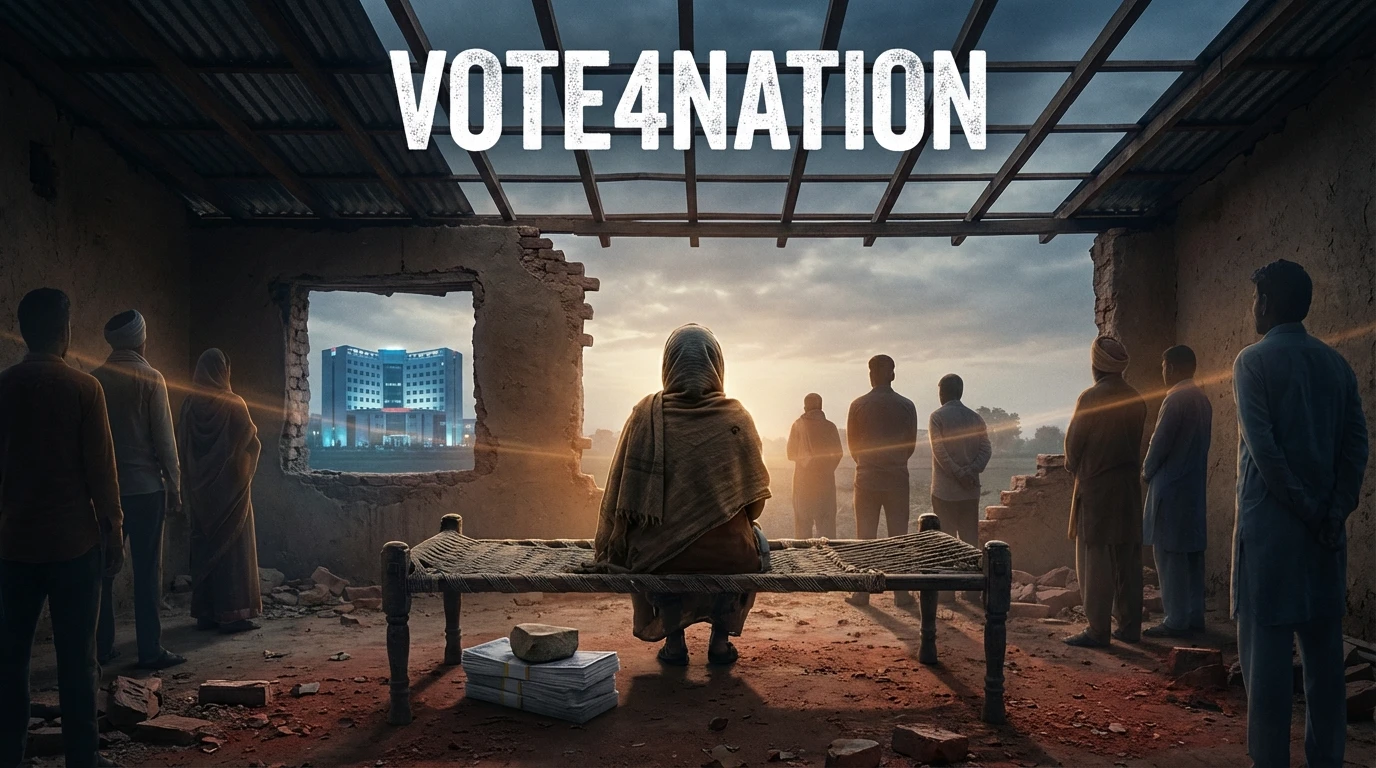
A poor farmer is forced to sell his ancestral land to pay the exorbitant medical bills of a private hospital to save his son, only to find out the hospital might have kept the dead child on a ventilator to extract more money.
The Price of Breath: A Father's Trade
The smell of a hospital is always the same. It smells of clean floors, sharp medicines, and fear. For Ramesh, a simple farmer from a small village in Bihar, this smell will haunt him forever. This is not just a story about sickness. It is a story about how a system eats the poor alive.
Ramesh had a small piece of land. It was green and gave his family rice and wheat. He had a wife, Sunita, and a ten-year-old son, Raju. Raju was the light of their home. He loved to run in the fields and fly kites. But one evening, the light flickered.
The Fever That Burned the Dream
It started with a high fever. Raju’s body was burning. The village doctor gave some pills, but they did not work. Two days passed. Raju stopped talking. His eyes were half-open. Panic struck Ramesh's heart like a heavy stone.
They rushed to the government hospital in the district town. The scene there was chaos. People were sleeping on the floor. There were no beds. A tired nurse looked at Raju and said, "Take him to the city. We have no ventilators here. Hurry."
"I held my son's hand. It was hot, so hot. I promised him, 'Baba is here. Nothing will happen.' But inside, I was shaking."
The Shiny Trap: City Care Hospital
Ramesh took a loan of 10,000 Rupees from a neighbor and hired a private ambulance. They reached the state capital. The ambulance driver stopped in front of a tall, glass building. "City Care Super Speciality Hospital." It looked like a hotel, not a hospital. The guards were dressed in crisp uniforms. The air conditioner was cold.
Ramesh ran to the reception with Raju in his arms. The receptionist did not look at the boy. She looked at the computer.
"Admission charge is 50,000 Rupees. Please pay at the counter first," she said without emotion.
"Madam, my son is dying! Please start the treatment. I have 10,000 now. I will pay the rest tomorrow," Ramesh begged.
"Sorry. Hospital policy. No money, no admission."
Ramesh fell to her feet. He cried. Sunita took off her gold earrings—her only jewelry—and placed them on the counter. The staff looked at each other. Finally, they took the cash and the gold as 'security' and took Raju inside. The doors of the ICU closed. That was the last time Ramesh saw his son awake.
The Black Hole of Billing
For the next five days, Ramesh and Sunita lived on the footpath outside the hospital. They were not allowed inside the ICU. Every morning, a man in a tie would come out with a piece of paper. It was never a report on Raju's health. It was always a bill.
- Day 1: Medicine charges - 25,000 INR
- Day 2: Ventilator charges - 40,000 INR
- Day 3: Specialist consultation - 15,000 INR
Every time Ramesh asked, "How is my son?" the answer was the same: "He is critical. We are trying. Pay the bill or we stop the medicine."
Selling the Soul of the Family
By the fourth day, the bill was over 2 Lakh Rupees. Ramesh had no money left. He called his brother in the village. There was only one way. The land. The land that his father and grandfather had tilled. The land that fed them.
"The moneylender knows you are desperate," his brother said on the phone. "He is offering half the market price."
"Sell it," Ramesh whispered. "Just send the money. I need to save Raju."
The land was sold. The sign of their survival was gone. Ramesh took the bundle of cash to the counter. The cashier counted it slowly. He printed a receipt. Ramesh felt light-headed. He had traded his future for his son's breath.
The Silent Ventilator
On the sixth day, the demand for money stopped. A doctor came out. He looked at his watch.
"We are sorry. Raju passed away due to multiple organ failure."
Sunita screamed. Her scream tore through the silent, cold lobby of the hospital. Ramesh stood frozen. Gone? Just like that? After the money was paid?
But the horror was not over. When they asked for the body, the billing staff stopped them. "There is a pending amount of 45,000 Rupees for the last 12 hours of oxygen and pharmacy. Clear it to take the body."
A Body Held Hostage
Ramesh lost his mind. He shouted, "I gave you everything! I sold my land! My son is dead! You want more money for a dead child?"
The security guards pushed him back. "Don't create a scene. Pay and go."
Ramesh sat on the floor. He had nothing left to sell. He had no home to go back to, no land to farm, and now, he could not even cremate his son. A stranger in the waiting room, seeing this cruelty, collected some money from other patients. They pooled together 45,000 Rupees.
Ramesh paid the final blood money. They gave him Raju’s body wrapped in a white sheet. The body was cold. Very cold. As Ramesh held him, he felt a strange stiffness.
A ward boy, whispering while helping them load the body into a cheap van, said, "Brother, don't tell anyone I said this. But the boy died yesterday night. They kept the machine on to increase the bill until you paid the big amount."
The Return to Nothing
The journey back to the village was silent. Ramesh looked out of the window. He saw fields that belonged to other people. He looked at his wife, who had no gold left. He looked at the white bundle that was his son.
He had entered the city as a poor farmer with a sick son. He was leaving as a beggar with a corpse.
The system did not just fail him. It looted him. It traded hope for profit. In India, for the poor, life is cheap, but death is very expensive. The hospital stands tall and shiny, waiting for the next Ramesh.
Story from real incident happened in India.
Produced by: VOTE4NATION Investigative Team