Sold for Breath: A Father's Fight Against Medical Greed
Location
Indore
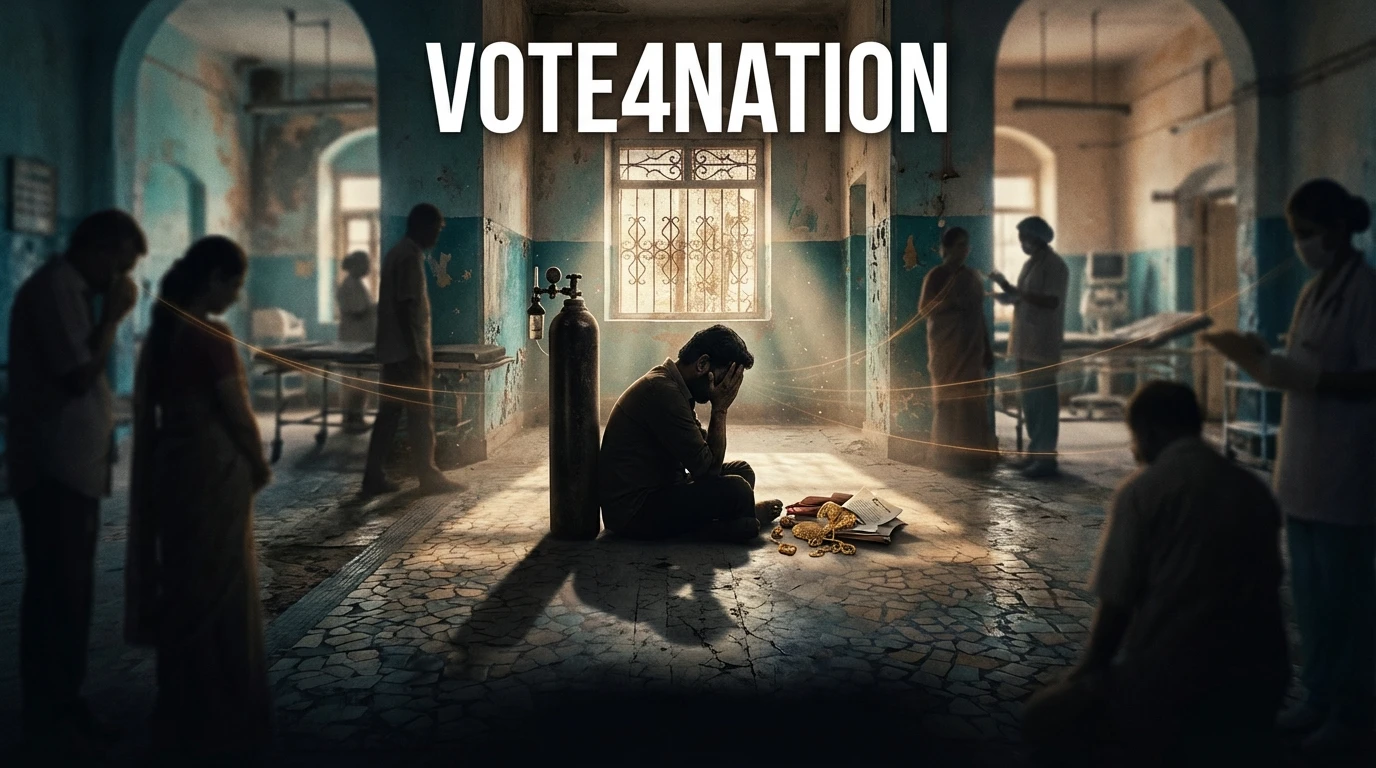
A daily wager's critical 8-year-old son is denied oxygen at a private hospital for 30 minutes due to a missing cash deposit. The delay causes permanent brain damage, while the hospital continues to overbill the family, forcing them into a debt trap.
The Price of a Breath: How a Deposit Delayed Life
It was 2:00 AM on a Tuesday. The rain was falling hard on the tin roof of Ramesh’s small house. Inside, the sound of rain was drowned out by the heavy breathing of his 8-year-old son, Aarav. Aarav’s chest was moving up and down very fast. His skin was burning with fever. Ramesh, a daily wage laborer who paints houses for a living, felt a cold fear grip his heart.
“He is not opening his eyes, Ramesh!” his wife, Sunita, screamed in terror. She held the boy tight, trying to give him her own warmth.
Ramesh did not wait. He wrapped his son in a blanket. He ran out into the dark, wet streets. He did not have a car. He did not have a bike. He ran until he found an auto-rickshaw. The driver saw the child and drove fast.
The First Door Closes
They reached the Government District Hospital first. The corridors were full of people sleeping on the floor. The smell of urine and old medicine was strong. Ramesh ran to the emergency counter.
“Please! My son cannot breathe! He needs a doctor!”
The man at the counter did not look up from his register. “No beds,” he said simply. “Go to the waiting area. The doctor will come when he comes.”
Ramesh looked at Aarav. The boy’s lips were turning blue. He could not wait. He made a decision that would ruin his life, but he hoped it would save his son. He ran back to the auto. “Take us to City Care Hospital,” he told the driver. It was the big, private hospital with glass walls and bright lights.
The Golden Cage
City Care Hospital looked like a hotel. The floor was shiny marble. The air was cool and smelled like flowers. There was no crowd here. But there was a gatekeeper: The Reception Desk.
Ramesh placed Aarav on a stretcher. A nurse came and checked the boy. “Oxygen level is low. He needs ICU immediately,” she said.
Ramesh felt relief. Finally, help was here. But then, the man in the tie behind the desk spoke. He was not a doctor. He was an administrator.
“Admission charge is 50,000 rupees. Please deposit it now so we can start the file,” the man said, typing on his computer.
Ramesh froze. “Sir, I have 2,000 rupees in my pocket. Please start the oxygen. I will bring the money. I promise. I will sell my wife’s gold chain. Just start the treatment!”
The man stopped typing. He looked at Ramesh’s dirty clothes. He looked at the mud on his slippers. “Hospital policy, sir. The system will not generate a patient ID without the deposit. No ID, no medicine from the pharmacy.”
30 Minutes of Hell
For the next 30 minutes, a tragedy unfolded. Aarav lay on the stretcher in the lobby. He was gasping for air like a fish out of water. The oxygen cylinder was right there, behind the desk. But the ‘system’ blocked it.
Sunita took off her mangalsutra—her wedding necklace. It was the only gold she had. She put it on the counter. “Take this! It is worth more than 50,000! Save my son!” she cried.
The administrator sighed. He called a security guard. “We are not a pawn shop, madam. Go sell it and bring cash.”
Ramesh fell to his knees. He touched the man’s feet. A father begging for his child’s life. Finally, a junior doctor walked by. He saw the child turning blue. He shouted at the staff, “What are you doing? He is going into shock! Start the line!”
Only then did the treatment begin. But the delay had done its damage.
The Silent Killer: The Bill
Aarav survived the night. But he did not wake up. The lack of oxygen for those 30 minutes had hurt his brain. He was in the ICU for 10 days.
Every morning, Ramesh was not asked about his son’s health. He was asked for money. The hospital staff handed him a new bill every 12 hours.
- Gloves: Charged for 50 pairs a day.
- Bed sheets: Charged as ‘Sterile Kits’ at 2,000 rupees each.
- Doctor Visit: The senior doctor came for 2 minutes. The charge was 3,500 rupees per visit.
Ramesh sold his small plot of land in the village. He borrowed money from a loan shark at 10% interest per month. He paid 4 Lakh rupees in 10 days. He was now a slave to debt for the rest of his life.
The Final Blow
On the 11th day, the money ran out. The loan shark refused to give more. Ramesh went to the billing counter with folded hands. “I have nothing left. Please, treat him under the government scheme for the poor.”
The hospital manager shook his head. “We have used our quota for government schemes this month. You have to pay cash or take the patient discharge.”
“Discharge? He is on a ventilator! If I take him out, he will die!” Ramesh screamed.
“That is not our problem,” the manager said coldly. “We are a business, not a charity.”
That evening, the pharmacy refused to give the life-saving injection because there was an outstanding balance of 12,000 rupees. The nurses stopped coming as often. The air conditioning in the waiting room felt colder than ever.
The Investigation
When VOTE4NATION heard about this, we rushed to the hospital. We posed as relatives. We saw the fear in the eyes of other parents. We saw the billing department acting like bank recovery agents.
We looked at Ramesh’s bills. We found that the hospital had charged for medicines that were never used. They charged for ‘Emergency Care’ when the patient was made to wait in the lobby for money.
This is not healthcare. This is hostage-taking.
Aarav is now back home. He is alive, but he cannot walk or talk properly. The doctor says he suffered ‘Hypoxic Brain Injury’ due to a delay in oxygen. That 30-minute delay at the reception desk took away Aarav’s childhood.
Ramesh sits by his son’s bed today. He has no land, no gold, and a debt he can never repay. He looks at us with dead eyes.
“I thought hospitals were temples where doctors are gods,” Ramesh whispered. “But this was a market. And I did not have enough money to buy my son’s life.”
This happens every day in our country. Private hospitals hold patients hostage for money. They delay treatment for deposits. They inflate bills because they know a father will pay anything to save his child. It is time we ask: Is a life only worth what is in your pocket?
Story from real incident happened in India.
Produced by: VOTE4NATION.in