The Price of a Beat: When Boardrooms Celebrate, Waiting Rooms Weep
Location
Barabanki
Department
Ministry of Health and Family Welfare
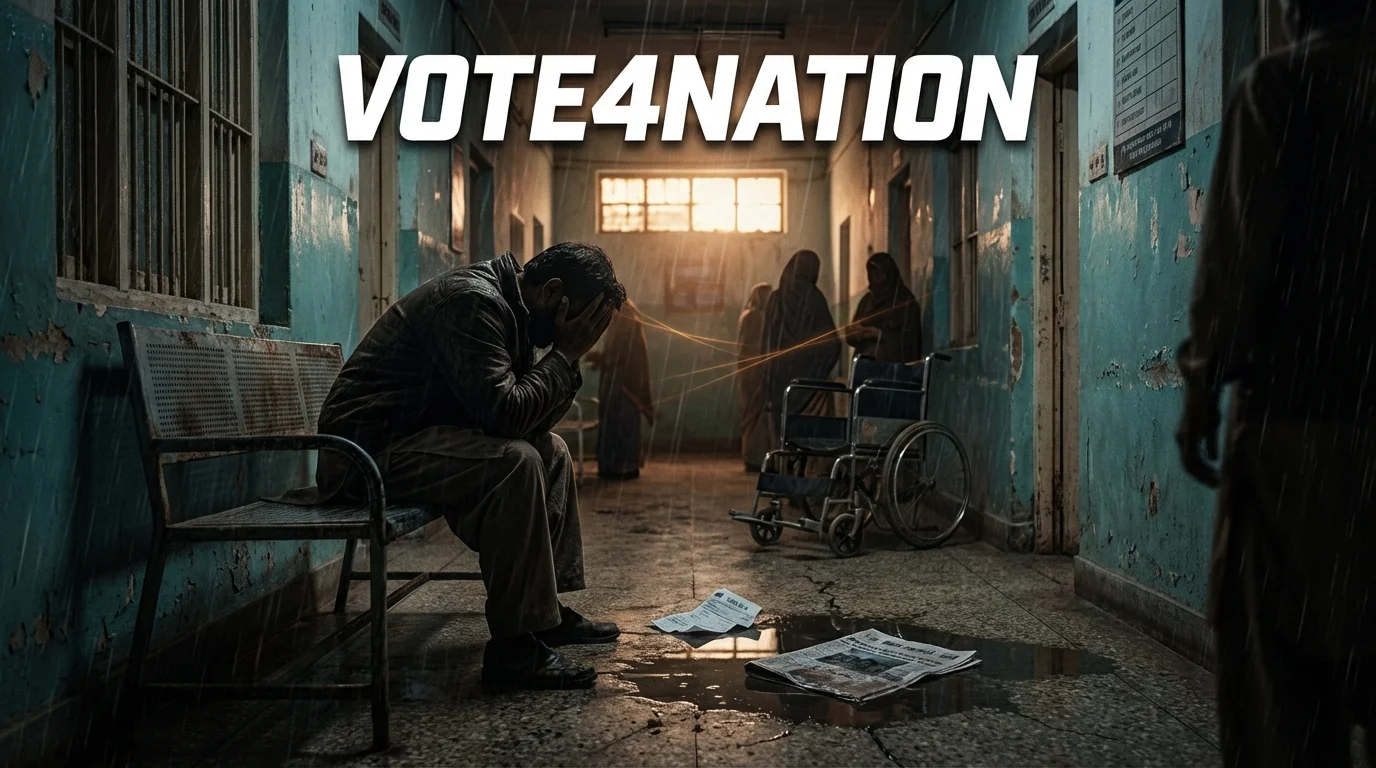
While Relief Cardiovascular appoints a new Chairman, Harry Rowland, to boost business, a poor farmer in UP loses his father because he cannot afford the company's expensive heart device in time. A story of corporate profit vs human life.
The Price of a Beat: When Boardrooms Celebrate, Waiting Rooms Weep
It was a hot afternoon in Barabanki, Uttar Pradesh. The sun was burning the skin, but Ramu felt cold inside. He was standing outside the ICU of a private hospital. His hands were shaking. In his pocket, he had a crumpled piece of paper. It was a bill. A bill that asked for more money than Ramu had earned in his whole life.
Inside the glass doors, his father, Shiv Narayan, was fighting for every breath. His heart was weak. The doctors said he needed a special machine to make his heart pump blood. A device. Without it, the heart would stop. Just like an old engine that runs out of fuel.
"Get the money by evening, Ramu. Or we cannot operate. The supplier needs cash. This device comes from a big company. They do not give credit to poor people."
The News from Far Away
While Ramu was crying in a dirty hospital corridor, a different world was celebrating. Thousands of miles away, in a shiny office with air conditioning and soft carpets, big news was announced. Relief Cardiovascular, a giant company that makes heart devices, had a new boss.
The news reports said: "Relief Cardiovascular appoints Harry Rowland as board chairman."
People in suits clapped. They shook hands. They talked about "growth" and "markets" and "profits." Harry Rowland, a man who had run big companies before, was now in charge. The news said he was an expert. The investors were happy. The share prices might go up. It was a good day for business.
But in Barabanki, nobody knew who Harry Rowland was. Ramu did not care about the Board Chairman. Ramu only cared about his father. But these two worlds were connected. They were connected by an invisible thread of money and pain.
The Business of Staying Alive
Ramu went to the pharmacy counter. The smell of medicines made him feel sick. He asked the man at the counter about the price of the cardiac device.
"50,000 Rupees," the man said, not looking up from his phone. "Plus taxes."
50,000 Rupees.
Ramu was a farmer. He grew wheat. Last season, the rain destroyed half his crop. He had sold his wife's gold bangles yesterday to pay for the bed charges. Now, where would he get 50,000 more?
"Sir, please," Ramu begged. "My father is dying inside. Put the device in him. I will pay. I promise. I will sign my land papers to you."
The man at the counter finally looked up. His eyes were tired. He had seen a hundred Ramus before.
"It is not in my hands, brother," the man said softly. "The company rules are strict. No payment, no device. The stock must be accounted for. If I give it to you for free, the money comes out of my salary. Go ask the big bosses who make these rules."
The Gap Between Rich and Poor
This is the ruthless truth of India's healthcare today. It is a business. A very big business.
When companies like Relief Cardiovascular make decisions, they look at spreadsheets. They look at numbers. They appoint leaders like Harry Rowland to make the company strong. But what does "strong" mean? Does it mean saving more lives? Or does it mean making more money?
For the shareholders, Harry Rowland is a hero. He knows how to run a business. He served as CEO of Endotronix. He knows the industry.
For Ramu, the company is a monster. It is a faceless giant that holds his father's life in its hand and demands a ransom.
Why is healthcare so expensive?
- Middlemen take a cut.
- Hospitals take a cut.
- Import taxes are high.
- Patents protect the prices.
The device Ramu needed probably cost a fraction of the price to make. But by the time it reached the dusty hospital in Barabanki, the price had touched the sky. The profit margins pay for the shiny offices. They pay for the press releases. They pay for the salaries of the Board Chairman.
The Final Hours
Ramu ran out of the hospital. He called his uncle. He called the village moneylender. The moneylender said he would give the money, but at 10% interest per month. Ramu agreed. He would become a slave to debt for the rest of his life, but he had to save his father.
It took four hours to get the cash. Four long hours.
When Ramu ran back into the hospital, sweating and panting, clutching a bundle of dirty notes, silence greeted him.
The nurse was standing by his father's bed. She was pulling a white sheet over Shiv Narayan's face.
The heart had stopped waiting. The engine had failed. The business transaction was too slow for the speed of death.
"I brought the money!" Ramu screamed, holding out the cash. "Look! I have the 50,000! Give him the device! Call the new Chairman! Tell him I paid!"
But the dead do not need devices. They do not need discounts. They only leave behind silence and debt.
The Invisible Injustice
The next day, the medical news websites updated their feeds. "Relief Cardiovascular appoints Harry Rowland as board chairman." It was a celebrated move. Industry experts said the company was poised for a great future.
In the village, Ramu burned his father's body on a pyre of wood. The smoke rose up into the same sky that covered the corporate offices.
Nobody reported on Shiv Narayan's death. It was not business news. It was just another poor Indian dying because he could not afford to live.
We must ask these questions:
When we read about big appointments in healthcare companies, do we think about the patients? Do these leaders know that their pricing policies kill people in small towns? Is healthcare a service, or is it just a way to extract money from the desperate?
Harry Rowland has a big job ahead. We hope he thinks about Ramu. We hope he thinks about the millions of Indians who look at a bill and see a death sentence.
But until the system changes, until healthcare becomes a right and not a luxury, the boardrooms will cheer, and the waiting rooms will weep.
This is the state of our nation. Where the stock market graph goes up, and the patient's pulse goes down.
Story from real incident happened in India.
Produced by: VOTE4NATION Investigative Team